
HIV Prevention: What You Need To Know
May 2026
Are HIV and AIDS the same thing? It’s a question we get asked when delivering education sessions.
Short answer - No, they’re not the same.
But there is more to know!
We sat down with Advanced Trainee in Sexual Health Medicine, Emily, to unpack HIV in this blog post.
Read on for the slightly longer answer, co-written with Emily, and learn about how to prevent HIV then jump over to the HIV factsheet translated in Hindi, Mandarin, Nepali and Thai on the International Student Health Hub to keep learning!
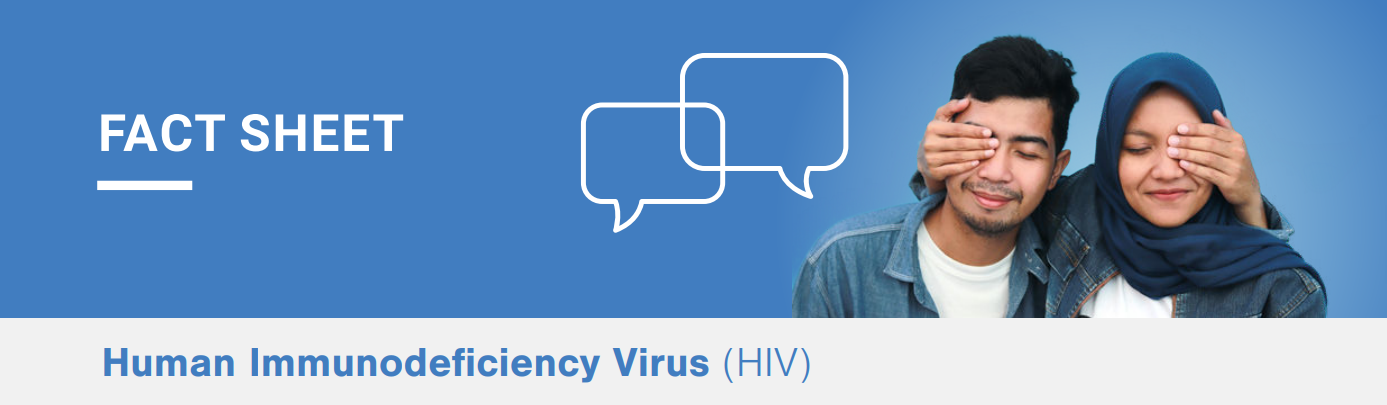
HIV stands for Human Immunodeficiency Virus which is a virus that attacks your immune system (where our body fights infection). People who get diagnosed and start treatment early can live long, healthy lives.
Just listen to the empowering advocates living with HIV, Tasha and Mel, on our On The Couch podcast episode.
If left untreated for a long time, HIV will damage the immune system to the point where a serious life-threatening condition called Acquired Immune Deficiency Syndrome (AIDS) develops.
What a lot of people don't realise is that most people with HIV often don't look or feel sick. Most people with HIV have no symptoms until years after first getting HIV or they might not have any symptoms at all. That means you can't tell if someone has HIV just by looking at them — and neither can they.
The only way to know your HIV status is to get tested.
How can HIV spread?
HIV is passed from person to person through semen, blood, vaginal fluid, anal fluid or breast milk of a person with HIV who has a detectable viral load (stay with us and we will explain that a little later).
The most common ways HIV spreads are:
Having vaginal or anal sex without a condom with someone who has HIV
Sharing needles or injecting equipment
Unsterile medical or tattoo procedures done overseas
From a parent to a baby during pregnancy, birth, or breastfeeding
That's it.
You cannot ‘catch’ HIV from hugging, kissing, holding hands, sneezing, coughing, sharing food or drinks, or using the same toilet as someone. And you can’t get HIV from sharing saliva, sweat or tears.
How do you prevent HIV?
There are actually several ways to protect yourself from HIV. You don't have to pick just one. Using more than one method at the same time is called ‘combination prevention’ and can includes the use of condoms, PrEP, U=U and/or PEP.
Condoms
Condoms are one of the easiest and most effective ways of preventing HIV. What we love about condoms is that they are the ultimate multitasker. They protect against other sexually transmissible infections (STIs) and also unplanned pregnancy (if that is a risk for you).
Always use a condom with water-based lubricant during vaginal and anal sex. Using lube helps to prevent the condoms from breaking (and enhances pleasure).
Find free condoms across the Illawarra Shoalhaven on our Condom Dispenser Map
or order a discrete delivery of condoms through FreedomCondom.org.au

Needle and Syringe Safety
If you use needles for injecting, make sure they’re sterile. The NSW Government aims to reduce syringe sharing among people who inject drugs and increase the distribution of sterile injecting equipment.
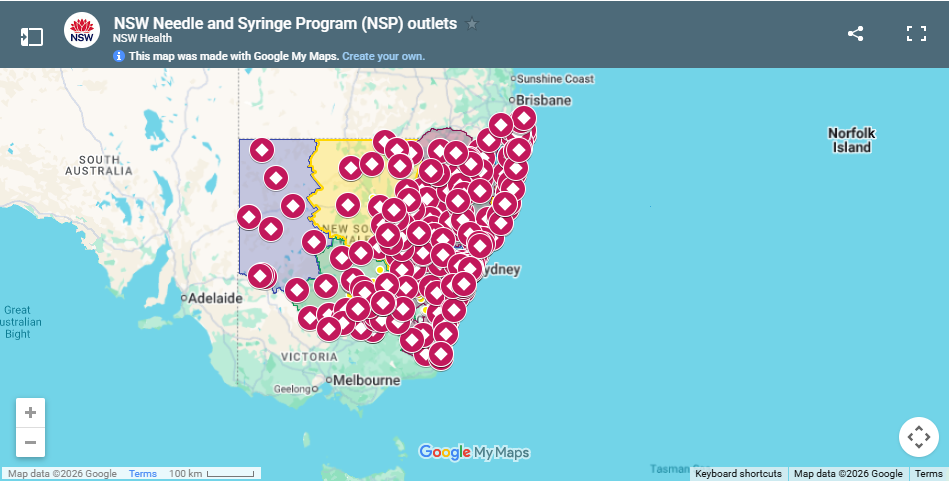
Click on the map below to find public a needle and syringe (NSP) outlet near you. The map includes staffed NSPs where you can access advice, information and referral as well as machines and chutes.
PrEP Is The Pill That Keeps You HIV Negative
PrEP stands for Pre-Exposure Prophylaxis. It's a medication that HIV-negative people can take to stop them getting HIV. When taken properly, PrEP reduces the risk of getting HIV through sex by 99%.
Think of it like a daily tablet that keeps HIV out of your body.
It doesn't protect against other STIs though, so using condoms alongside PrEP is always a good idea.
PrEP is recommended for people who are at higher risk of getting HIV.
This includes:
People who have anal sex without always using a condom
People whose sexual partners include men who have sex with men
People who have a partner who is HIV-positive
People who inject drugs or other substances
Overseas travelers with any of the above circumstances
How do you take PrEP?
PrEP usually comes as a tablet you take once a day.
There are other ways to take it too — like on-demand (only around the time you have sex).
Your doctor can help you figure out which approach works best for you or check out the PrEP dosing frequency tool by Ending HIV.
How Do You Get PrEP in Australia?
If you have a Medicare card, PrEP is available at a very low cost through the government's Pharmaceutical Benefits Scheme (PBS). Any doctor can write you a prescription, and you can fill it at any pharmacy.
Before you start, your doctor will do a blood test to check for HIV and other STIs, and also check your kidney health. After that, you'll have a check-up every three months.
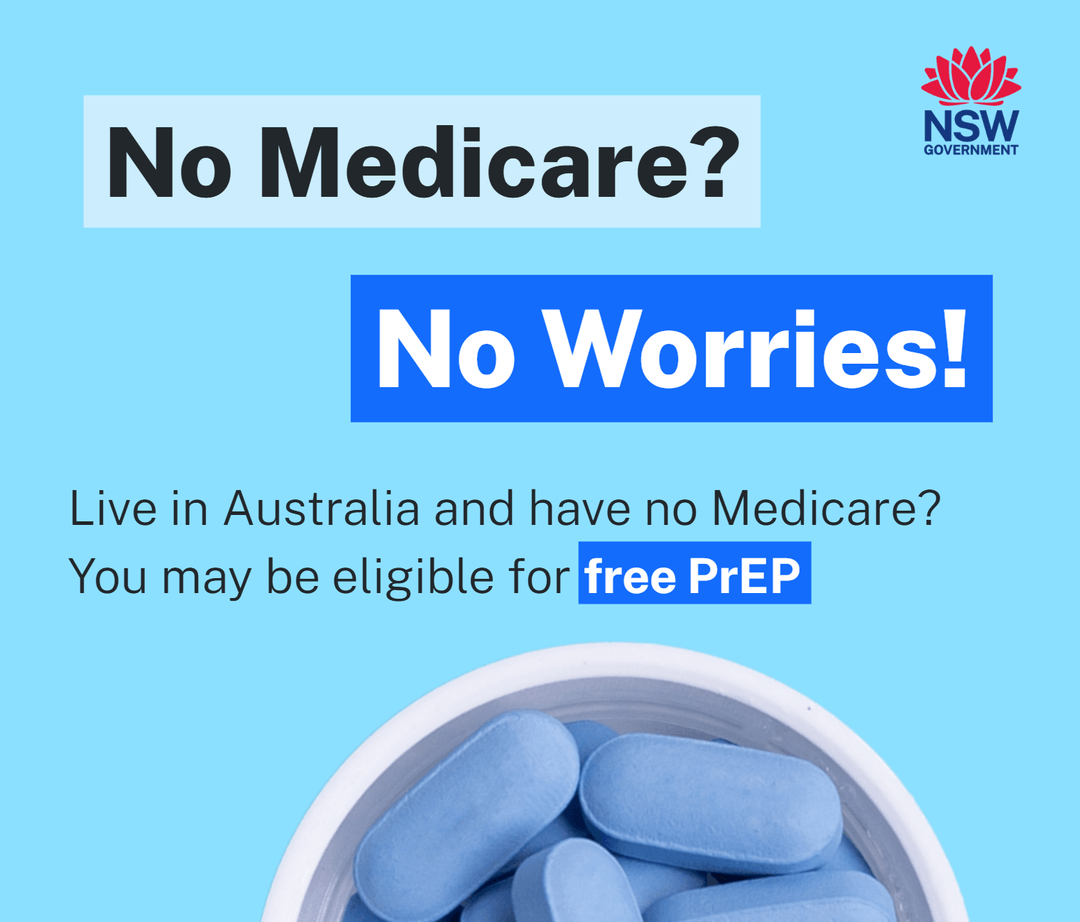
No Medicare? No worries!
You can still get PrEP for free in NSW as part of a new government-funded initiative from the Sexual Health Info Link (SHIL).
You can access PrEP through:
Your nearest public sexual health clinics in NSW here: health.nsw.gov.au/sexualhealth/Pages/sexual-health-clinics.aspx
A telehealth service (phone or video call) — call 1800 451 624 and choose option 5. The SHIL team will help connect you to the right service. Lines are open Monday to Friday, 9am to 5:30pm.
This program is for people living in NSW for more than a short-term visit who are at risk of HIV. That includes people on student, working, or working-holiday visas.
If you need help in another language, a free interpreter is available by first calling TIS National on 131 450.
One more thing worth knowing: getting tested for HIV — whether the result is positive or negative — does not affect your visa. Your results are confidential and are not shared with the Department of Home Affairs.
Using PEP when Something's Already Happened
If you think you may have been exposed to HIV — for example, a condom broke during sex, or you shared a needle — there is an emergency option called PEP.
PEP stands for Post-Exposure Prophylaxis. It's a course of medication you take for 28 days to stop HIV from establishing itself in your body. It only works if you start it within 72 hours of possible exposure — and the earlier the better - time really matters here.
If you think you need PEP, go to a hospital emergency department or sexual health clinic right away. Don't wait until the next day. You can also call the NSW PEP Hotline on 1800 737 669 (free call, available 24/7) to find out where to go.
Testing: Make It a Habit, Not a Fear
Getting regular STI tests every 3-12 months is an important part of protecting yourself and your partner/s. There are many HIV testing options available including self-testing.
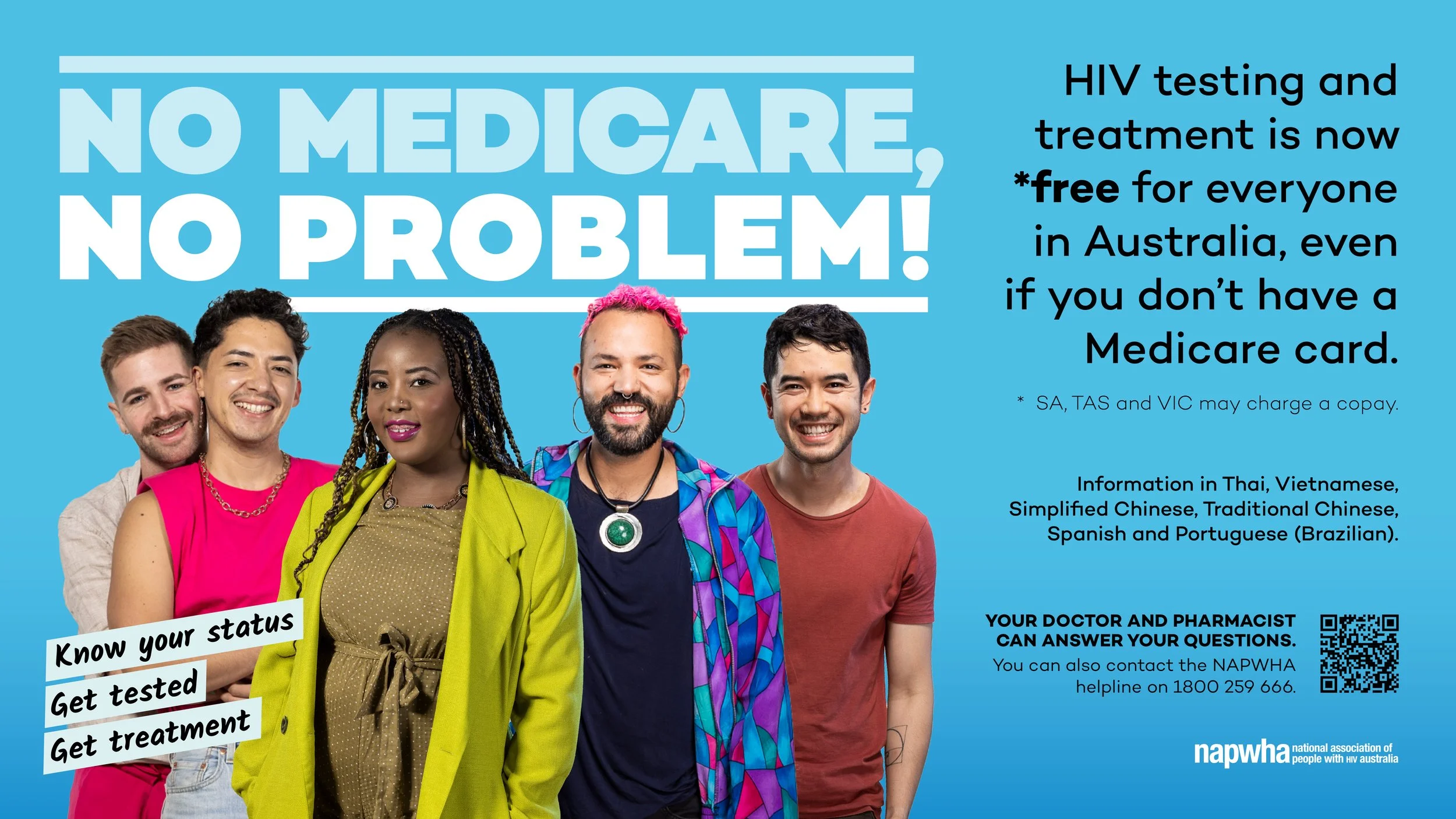
An HIV test is a blood test. It’s not automatically included in regular blood tests, so you need to specifically ask your doctor or clinic for one.
You can get tested at:
Your local doctor
A sexual health clinic
Some university health centres
Testing is free or low cost, quick, and completely confidential. A good general guide is to test every 3 to 12 months if you are sexually active. If you have multiple partners or are on PrEP, testing every 3 months is recommended.
But what is an Undetectable Viral Load?
People with HIV who are on effective treatment can achieve something that’s called an ‘undetectable viral load’ sometimes called UVL which means that the amount of virus in their body is extremely low.
When they continue to take their treatment as directed, they can’t pass HIV on to others.
This is called Undetectable = Untransmittable (U=U) and has now become a global HIV prevention campaign.
Learn more on Ending HIV website
Key points to remember
HIV is preventable.
You have real options like condoms, NSP, PrEP, PEP, U=U and regular testing — and help is available no matter what your Medicare status is.
If you're in NSW and don't have Medicare, the SHIL Medicare Ineligible PrEP program is there specifically for you. No one should miss out on protection because of their visa or insurance situation.
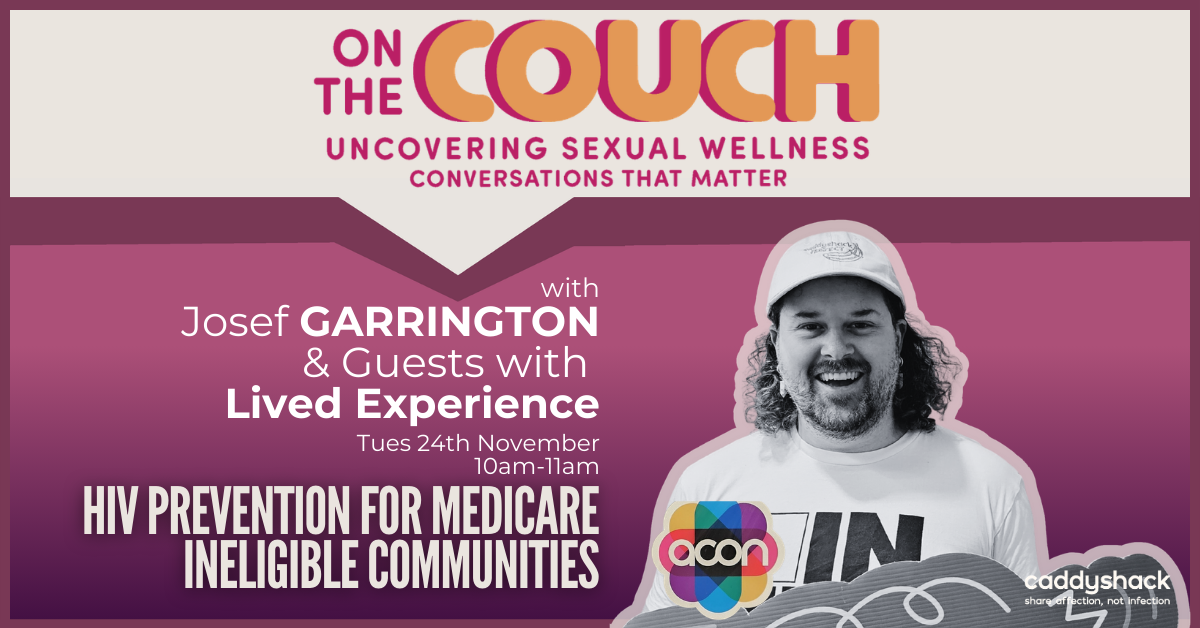
Want to learn more about HIV prevention? Get your free ticket to our upcoming On The Couch podcast episode recording with ACON’s Josef Garrington.
Peace, Love, & Protection